July 1, 2026 · 8 min read
Best Rolex Models to Invest In: What Actually Holds Value
A practical look at which Rolex models hold value over time, which ones depreciate, and what factors drive long-term resale performance.
Every year, thousands of first-time buyers ask the same question: which Rolex should I buy if I want it to hold its value? The answer is more nuanced than most YouTube videos and forum posts make it seem. Some models consistently appreciate over time. Others lose value the moment you walk out of the store. Understanding which factors actually drive long-term value is the difference between a smart purchase and an expensive lesson.
This is not financial advice. This is an educational analysis of historical patterns and what the data shows about specific references.
What Drives Rolex Resale Value
Before picking specific models, it helps to understand the forces at work. Four factors matter most: production scarcity (how many Rolex makes and how hard each reference is to buy at retail), material (steel sports models historically outperform precious metal dress watches on a percentage basis), cultural significance (iconic models with strong brand recognition and celebrity associations), and discontinuation (references that Rolex stops producing almost always see immediate price jumps on the secondary market).
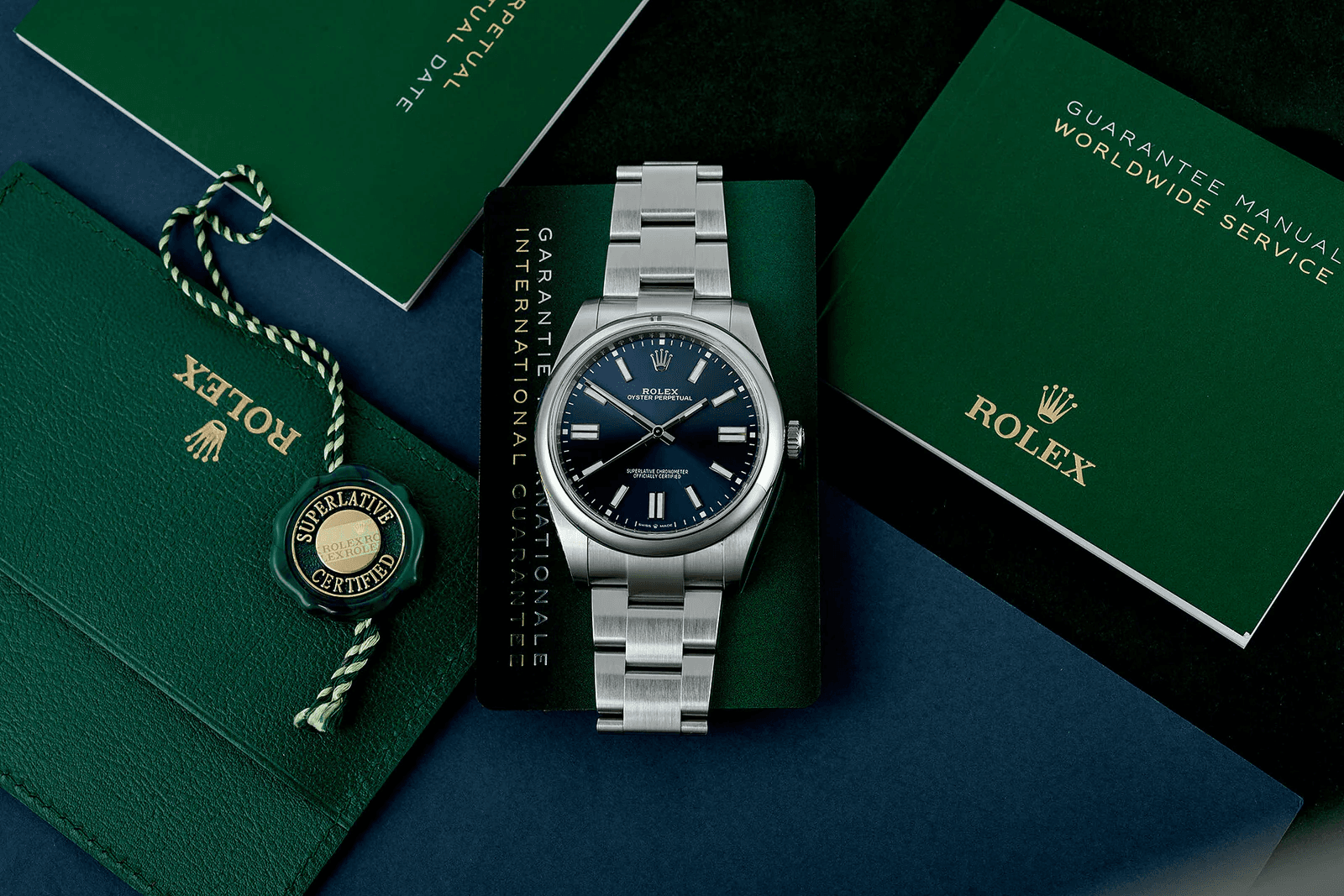
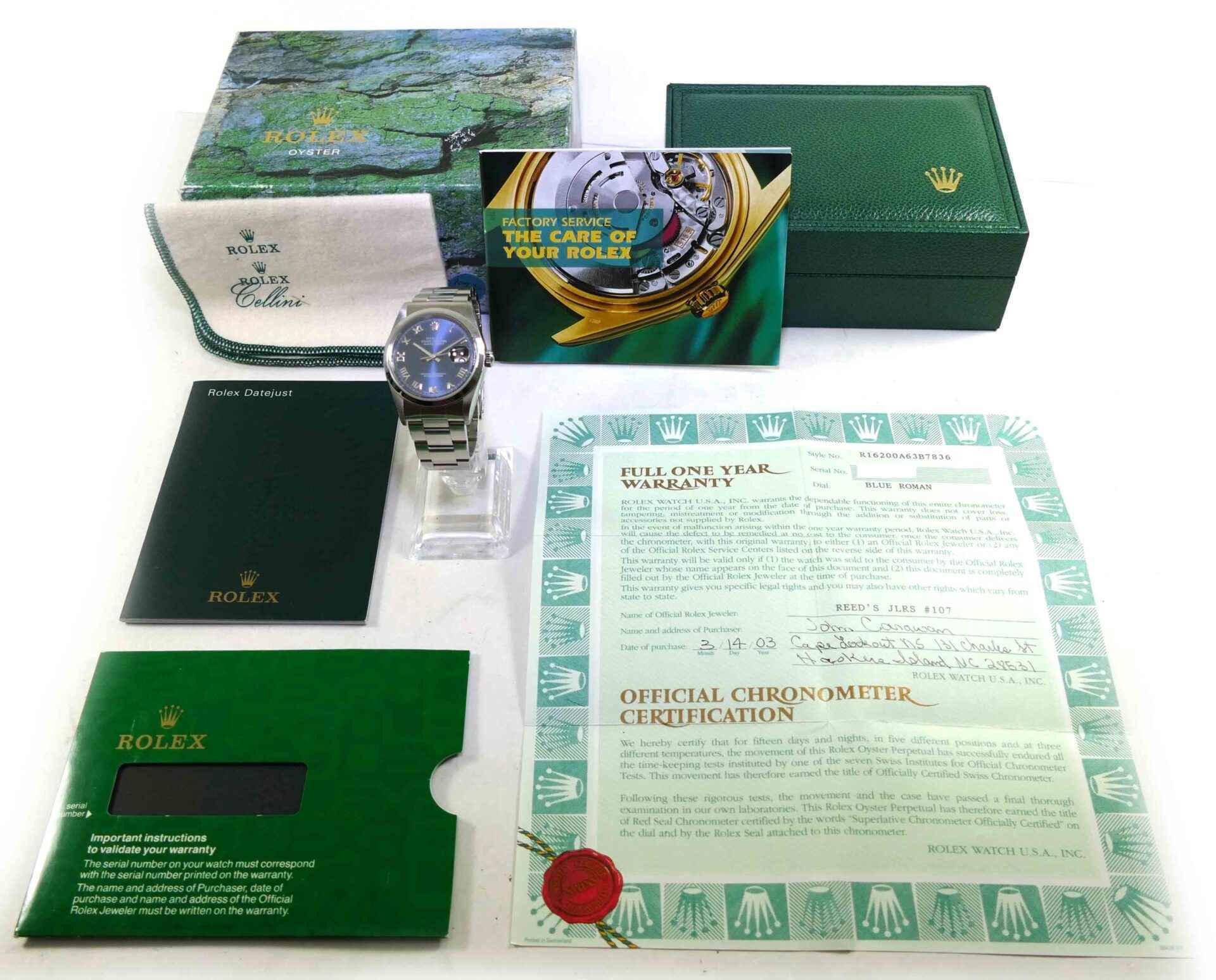
One factor many new buyers underestimate is the power of a complete set. A Rolex with its original box, warranty card, hang tags, and purchase receipt commands a 10 to 20 percent premium over the same reference sold "watch only." If you are buying with investment potential in mind, never lose the packaging.
Cosmograph Daytona (Steel): The Undisputed King
The steel Daytona has been the single hardest Rolex to buy at retail for over two decades, and the secondary market reflects that. The outgoing ref. 116500LN (produced 2016 to 2023) launched at a retail price of roughly $14,550 and consistently traded between $25,000 and $35,000 on the grey market during its entire production run. Even after the newer generation replaced it, the 116500LN held steady because discontinued Daytonas have a track record of climbing.
The previous steel Daytona (ref. 116520, produced 2000 to 2016) has appreciated approximately 40 to 60 percent since discontinuation, depending on dial color and condition. White dial examples consistently trade above black dial versions, partly due to the "Panda" aesthetic. The oldest examples from the early 2000s with full original sets now approach the $30,000 range.
What makes the Daytona special from an investment perspective is the combination of chronograph functionality, the Paul Newman legacy, and the fact that Rolex produces far fewer Daytonas than Submariners or Datejusts. The production constraint is structural, not artificial. Chronograph movements are more complex to manufacture, which naturally limits volume.
Submariner No-Date (Steel): The Quiet Performer
The no-date Submariner does not get the hype of the Daytona, but its track record is remarkable. The ref. 14060M (produced roughly 2001 to 2012) could be purchased at retail for under $6,000 at the start of its run. Today, clean examples with full sets trade between $10,000 and $13,000, representing a 70 to 100+ percent gain over a roughly 15-year holding period.
Its successor, the ref. 114060 (2012 to 2020), launched around $7,500 retail and now trades between $10,500 and $13,000 depending on year and condition. The current ref. 124060 trades at or slightly above its retail price of approximately $9,100, which means anyone buying at retail today is unlikely to lose money over a five-year hold.
The no-date Submariner benefits from a clean, symmetrical dial that purists love, a lower retail entry point than the date version, and the fact that it represents the most distilled version of the most famous dive watch ever made. Each time Rolex discontinues a no-date Sub reference, the value climbs.
GMT-Master II: Pepsi, Batman, and Sprite
The GMT-Master II colorway nicknames have become so embedded in watch culture that they drive demand on their own. The Pepsi (ref. 126710BLRO) and Batman (ref. 126710BLNR) on Jubilee bracelets both trade at significant premiums above their retail price of approximately $11,300.
The most interesting investment case in the GMT family is the discontinued Batman on Oyster bracelet (ref. 116710BLNR, produced 2013 to 2019). It was the first two-tone Cerachrom bezel Rolex ever produced, and its combination of historical significance and growing scarcity has pushed prices steadily upward since discontinuation. Clean examples with full sets now trade between $14,000 and $17,000, up from a retail price of approximately $9,250.
The Sprite (ref. 126720VTNR) is newer and harder to predict, but its left-handed crown configuration makes it a genuinely unique reference. If Rolex discontinues it without a direct replacement, history suggests it will appreciate.
Explorer (36mm): The Sleeper Pick
The Explorer is often overlooked in investment conversations, and that is exactly what makes it interesting. The ref. 114270 (2001 to 2010, 36mm) launched at roughly $4,000 retail. Today, clean examples trade between $6,500 and $8,500. That is a quiet 60 to 100+ percent return over roughly 15 years, with zero hype cycles or speculative buying driving the price.
The 39mm Explorer (ref. 214270, 2010 to 2021) was controversial among purists who preferred the original 36mm size. When Rolex discontinued it and returned to 36mm with the ref. 124270, the 214270 began appreciating as collectors recognized it as a distinct chapter in the Explorer story. The Mark II dial version (with lumed 3-6-9 numerals) is particularly sought after.
The Explorer tends to appreciate steadily rather than spike. It does not attract speculators, which means its price movements reflect genuine collector demand rather than market manipulation. For patient buyers, that is a healthier investment profile.
Day-Date (Vintage Yellow Gold): The Contrarian Play
Modern precious metal Rolex watches generally depreciate from retail in the short term. But vintage Day-Date references from the 1970s and 1980s tell a different story. The ref. 1803 and ref. 18038 in yellow gold with interesting dial configurations have seen 50 to 200+ percent appreciation over the past decade.
Stone dials are the standout performers. A Day-Date with an original malachite, lapis lazuli, or tiger's eye dial that might have traded for $12,000 to $15,000 in 2015 now commands $25,000 to $40,000 or more depending on condition. The gold content provides a floor value (roughly $8,000 to $10,000 in melt value alone for an 18k gold Day-Date), while the collector interest in unusual dials provides upside.
The key risk with vintage Day-Dates is dial originality. A refinished dial destroys most of the collector premium. Always verify that the dial is original to the case before paying collector prices.
Models That Tend to Lose Value
Not every Rolex holds its value. Datejust models in common configurations (steel, smooth bezel, Oyster bracelet, standard dial color) typically trade 10 to 25 percent below retail on the secondary market. The two-tone Rolesor Datejust depreciates even more, sometimes losing 30 percent or more in the first few years.
The Yacht-Master in Everose gold on Oysterflex, while a beautiful watch, has historically traded at a discount to retail. The discontinued Cellini dress watch line rarely commanded premiums during production and continues to trade below original retail values.
The pattern is consistent: steel sports models with limited production and strong cultural recognition hold and gain value. Precious metal dress watches and readily available configurations depreciate. There are exceptions on both sides, but this rule holds across decades of market data.
The Timing Factor
When you buy matters almost as much as what you buy. The Rolex secondary market peaked in early 2022 when speculative buying pushed prices to unsustainable levels. Some references traded at two to three times retail. The correction that followed saw prices drop 20 to 40 percent on popular sports models before stabilizing in late 2023.
Buyers who purchased at the peak experienced real paper losses. Those who bought at retail or waited for the correction are now sitting on healthy positions. The lesson: buying during hype cycles is the single fastest way to lose money on a Rolex. Buy at retail when possible, or buy during market corrections.
Key Takeaways
Focus on steel sports models with strong cultural recognition and constrained production. Preserve the complete set. Buy at retail or during market corrections. Avoid chasing hype on models that have already spiked. Hold for five years minimum. And most importantly, buy something you enjoy wearing, because the best investment is a watch you never regret buying, regardless of what the market does.
For a broader look at Rolex as an asset class, read our guide on whether Rolex watches are actually a good investment. If you want to understand the models themselves before making a decision, start with the 10 most popular Rolex models in 2026.
Think You Know Rolex?
Put your knowledge to the test with the free 12-question Chronodex challenge. No account required. See how you rank against thousands of other enthusiasts.
Take the Free ChallengeThis article is for educational purposes only. Chronodex is not affiliated with, endorsed by, or sponsored by Rolex SA, Rolex USA, or any of their subsidiaries. All brand names are used for educational and identification purposes only.