July 22, 2026 · 9 min read
Buying Vintage Rolex: What You Need to Know Before Spending Thousands
A practical guide to buying vintage Rolex watches, covering dial originality, case condition, serial numbers, common pitfalls, and where to buy safely.
Buying a vintage Rolex is one of the most rewarding things you can do as a watch collector. It is also one of the easiest ways to lose a lot of money if you do not know what you are looking at. The vintage market is filled with franken watches (assembled from parts of multiple watches), refinished dials passed off as original, polished cases sold as unpolished, and outright counterfeits that have become increasingly difficult to spot. This guide covers what you need to evaluate before spending thousands on a vintage Rolex.
What Counts as "Vintage"?
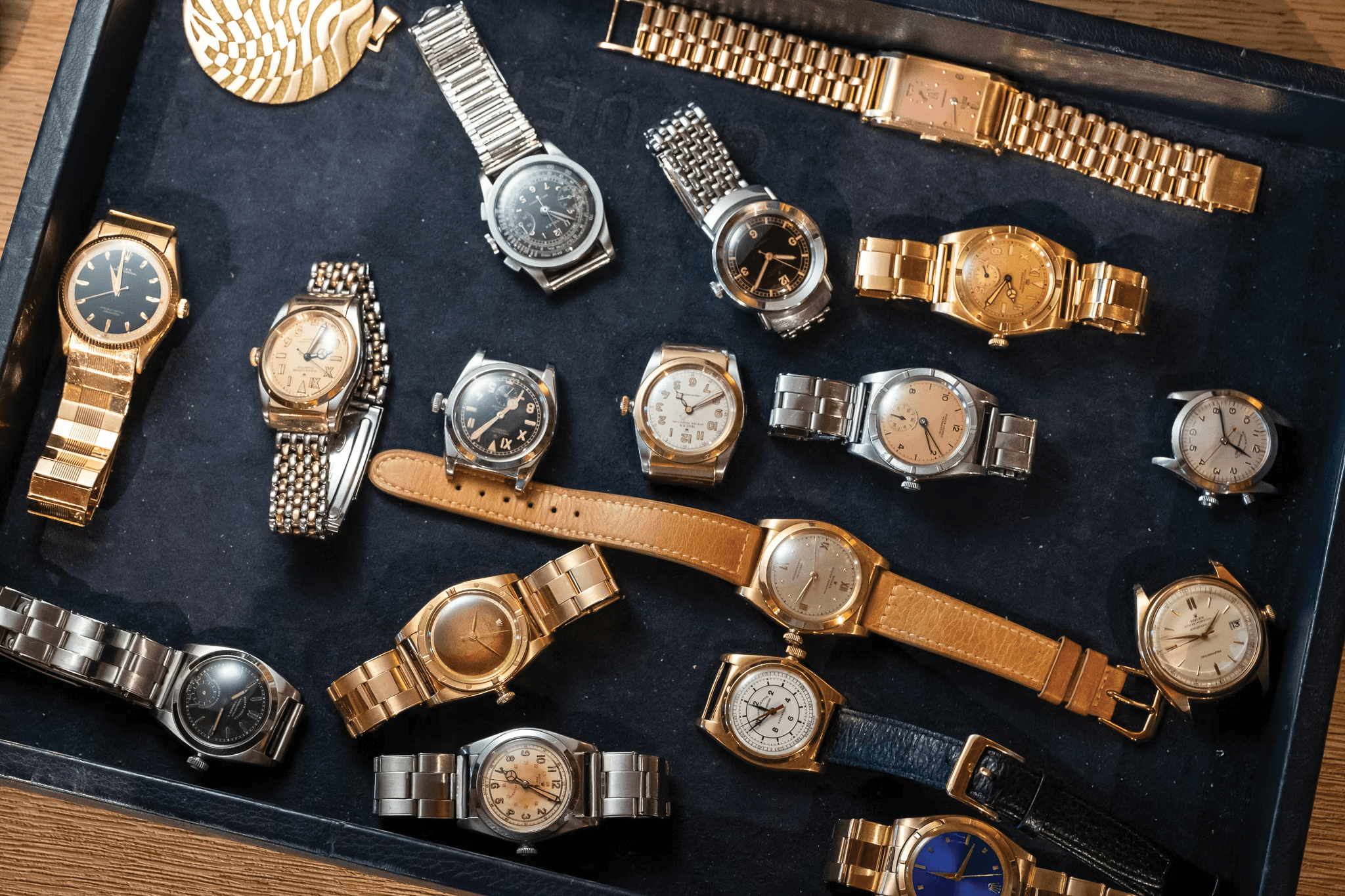
There is no universal definition, but most collectors consider a Rolex vintage if it was produced before the year 2000. Some draw the line earlier, at watches with acrylic crystals, tritium lume, or 4-digit reference numbers. Others use the transition to the Superluminova era (late 1990s) as the cutoff. The important thing is to understand that vintage does not automatically mean valuable. A vintage Datejust from the 1980s in fair condition might sell for less than a brand-new Oyster Perpetual. Rarity, model, condition, and originality determine value.
The Serial Number and Reference Number
Every Rolex has a serial number (which indicates the approximate year of production) and a reference number (which identifies the model, material, and bezel type). On vintage Rolex watches produced before 2005, both numbers are engraved between the lugs. The serial number sits at the 6 o'clock side, and the reference number at the 12 o'clock side. You need to remove the bracelet to see them. After 2005, Rolex moved the serial number to the rehaut (the inner ring of the dial) and eventually stopped engraving it between the lugs entirely.
Always verify both numbers before buying. Cross-reference the serial number with known production date ranges to confirm the watch is from the era the seller claims. Make sure the reference number matches the case, bezel, and dial configuration. A mismatched serial and reference is a red flag for parts swapping.
Dial Originality
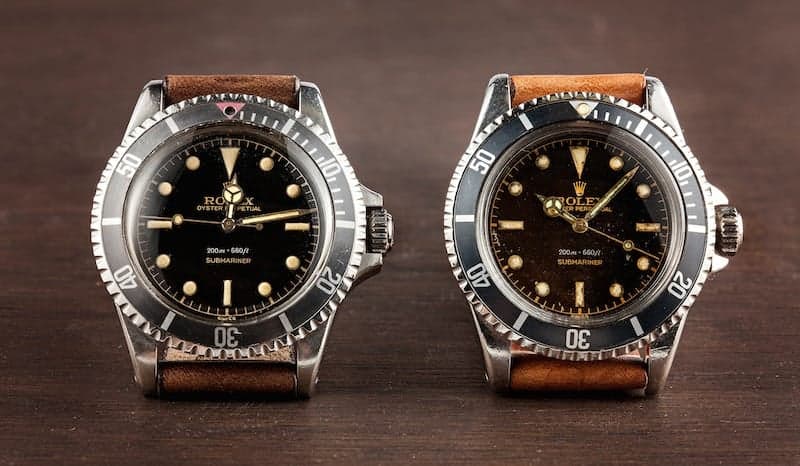
The dial is the single most important factor in vintage Rolex valuation. An original, unrestored dial with natural aging (called "patina") can be worth tens of thousands of dollars more than a refinished dial on the exact same reference. Tropical dials (dials that have changed color over time due to UV exposure or chemical reactions) are particularly prized, with some turning rich shades of brown, chocolate, or caramel.
Refinished dials are common in the vintage market, and they are not always disclosed. Signs of a refinished dial include overly crisp printing (vintage dials should show some softening of the text), misaligned text or logos, incorrect font styles for the era, and lume plots that look too clean or uniform. If the dial looks "too perfect" for a 40-year-old watch, it probably is not original.
Case Condition and Polishing
Vintage Rolex cases were made from thinner metal than modern references. Decades of polishing can remove a significant amount of material, rounding off the sharp edges on the lugs and bezel. A "full fat" case (one that has never been polished or has been polished minimally) is highly desirable and commands a premium.
When examining a vintage Rolex case, look at the lug edges. They should have defined, crisp lines. If the edges are rounded and smooth, the case has been polished heavily. Check the space between the lugs and the case. If it looks wider than it should, material has been removed. Also examine the caseback for deep scratches, tool marks from improper opening, or replaced gaskets that do not match the era.
Bezel Condition
Vintage Rolex sport watches (Submariner, GMT-Master, Daytona) had aluminum bezel inserts rather than the ceramic used on modern models. Aluminum bezels fade over time, and this fading is considered desirable by collectors. A GMT-Master with a faded "ghost" Pepsi bezel can sell for significantly more than one with a replacement insert in crisp, unfaded condition.
Bezel inserts are also one of the most commonly replaced parts on vintage Rolex watches. Check that the insert color, font, and pearl (the luminous dot at 12 o'clock) are correct for the reference and production year. Service replacement inserts often have subtle differences in font spacing or color shade that an experienced eye can spot.
Movement and Service History
Vintage Rolex movements should be original to the watch. The caliber number stamped on the movement should match what the reference number calls for. During service, Rolex will sometimes replace components (mainspring, balance wheel, escapement parts) with current production service parts. While this is functionally fine, purist collectors prefer watches with original movement components intact.
Ask for service records if available. A documented service history adds confidence in the watch's provenance and mechanical condition. If a watch has never been serviced in 30 years, it will likely need one soon, and a full Rolex service for a vintage piece can cost anywhere from $800 to several thousand dollars depending on what needs to be replaced.
Where to Buy Vintage Rolex
The safest places to buy vintage Rolex are established auction houses (Phillips, Christie's, Sotheby's, Antiquorum), reputable specialist dealers with decades of track records, and collector-to-collector sales through trusted communities and forums. Online platforms like Chrono24 and eBay offer buyer protections, but the quality and authenticity of listings varies widely.
Avoid buying vintage Rolex from casual sellers, pawn shops, or anyone who cannot provide clear photographs of the dial, case, movement, serial number, and reference number. If a deal seems too good to be true, it almost certainly is. The vintage Rolex market rewards patience and education. Take the time to learn reference numbers, dial variations, and serial number ranges for the models that interest you before spending any money.
Final Advice
The single best investment you can make before buying a vintage Rolex is education. Learn to read dials, cases, and movements yourself. Study auction catalogs. Join collector forums and follow the discussions. Handle as many watches as possible in person. The more you know, the less likely you are to overpay, buy a misrepresented watch, or miss a genuine opportunity when one appears.
Think You Know Rolex?
Put your knowledge to the test with the free 12-question Chronodex challenge. No account required. See how you rank against thousands of other enthusiasts.
Take the Free ChallengeThis article is for educational purposes only. Chronodex is not affiliated with, endorsed by, or sponsored by Rolex SA, Rolex USA, or any of their subsidiaries. All brand names are used for educational and identification purposes only.