May 6, 2026 · 9 min read
Rolex vs Omega: An Honest Comparison for Watch Buyers
An objective comparison of Rolex and Omega covering build quality, movement technology, pricing, value retention, availability, and design philosophy.
Rolex and Omega are the two most recognized luxury watch brands in the world. Both have rich histories, both produce excellent timepieces, and both command strong loyalty from their respective fan bases. If you are deciding between the two, the comparison is not as simple as "one is better." They are different brands with different philosophies, and the right choice depends on what you value most.
Brand Heritage and History
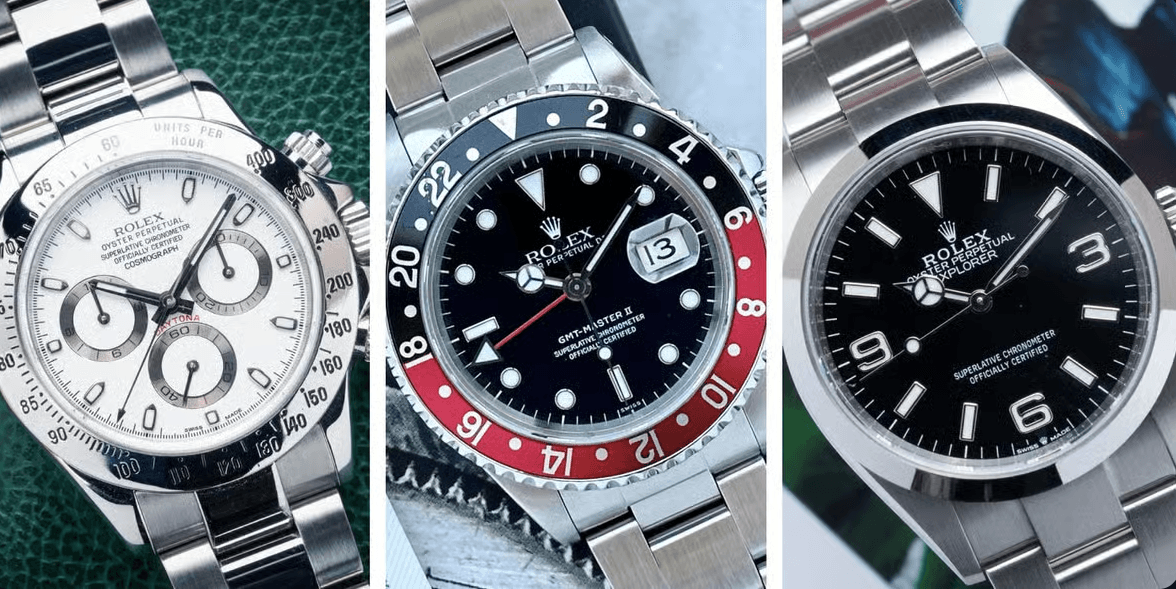
Rolex was founded in 1905 in London by Hans Wilsdorf and later moved its operations to Geneva, Switzerland. The company has been responsible for numerous firsts in watchmaking, including the first waterproof wristwatch (the Oyster in 1926) and the first wristwatch with an automatically changing date (the Datejust in 1945). Rolex has always positioned itself as a tool watch brand that eventually became a status symbol.
Omega was founded in 1848 in La Chaux-de-Fonds, Switzerland, making it the older company by more than 50 years. Omega's claim to fame includes being the official timekeeper of the Olympic Games since 1932 and producing the Speedmaster, which NASA selected for all manned space missions. The Speedmaster became the first watch worn on the Moon during Apollo 11 in 1969.
Build Quality and Materials
Both brands produce watches to very high standards, but their approaches differ. Rolex uses 904L stainless steel (which they call Oystersteel), a higher-grade alloy than the 316L steel used by most other watchmakers, including Omega. 904L is more corrosion-resistant and takes a higher polish, though the practical difference in durability for daily wear is minimal.
Omega counters with its own material innovations. The brand has pioneered the use of ceramic in watch cases (not just bezels), and their Sedna Gold alloy is a proprietary rose gold blend designed to resist fading over time. Omega also uses titanium more extensively than Rolex, particularly in their Seamaster Planet Ocean and Speedmaster lines.
In terms of pure finishing quality at comparable price points, Rolex generally has the edge. The fit and finish of a Rolex bracelet, the precision of the bezel action, and the overall solidity of the case are consistently excellent. Omega is also very good, but some collectors note that Rolex's quality control is marginally tighter, especially on the bracelet and clasp.
Movement Technology
This is one area where Omega has a strong argument. Omega's Co-Axial escapement, introduced in 1999, reduces friction in the movement and theoretically extends service intervals. Their Master Chronometer certification (granted by METAS, the Swiss Federal Institute of Metrology) tests watches to a higher standard than the COSC chronometer certification that Rolex uses as a baseline.
The METAS certification includes tests for magnetic resistance up to 15,000 gauss, which is far beyond what most watches can withstand. Rolex addresses magnetism differently, using a Parachrom hairspring that is resistant to magnetic fields, but Rolex movements are not independently tested to the same magnetic resistance standard.
Rolex movements are superb and are certified to -2/+2 seconds per day (tighter than the COSC standard of -4/+6). Both brands make movements that will keep excellent time for years between services. The practical difference in daily accuracy between a well-adjusted Rolex and a well-adjusted Omega is negligible.
Price and Value
At retail, Omega is generally less expensive than Rolex for comparable models. An Omega Seamaster Diver 300M in steel starts around $5,400 to $5,800, while a Rolex Submariner Date starts at approximately $10,000. An Omega Speedmaster Moonwatch starts around $6,500 to $7,000, while a Rolex Daytona in steel retails for about $15,000 (and sells for much more on the grey market).
However, Rolex watches hold their value significantly better on the secondary market. A steel Rolex Submariner purchased at retail will typically sell for at or above retail price on the pre-owned market. An Omega Seamaster purchased at retail will usually depreciate 20% to 40% the moment you leave the store. This gap has narrowed somewhat in recent years, but Rolex still leads in value retention by a wide margin.
If you are buying the watch to wear and enjoy, Omega offers exceptional quality at a lower price point. If resale value and market demand are factors in your decision, Rolex is the stronger choice.
Availability
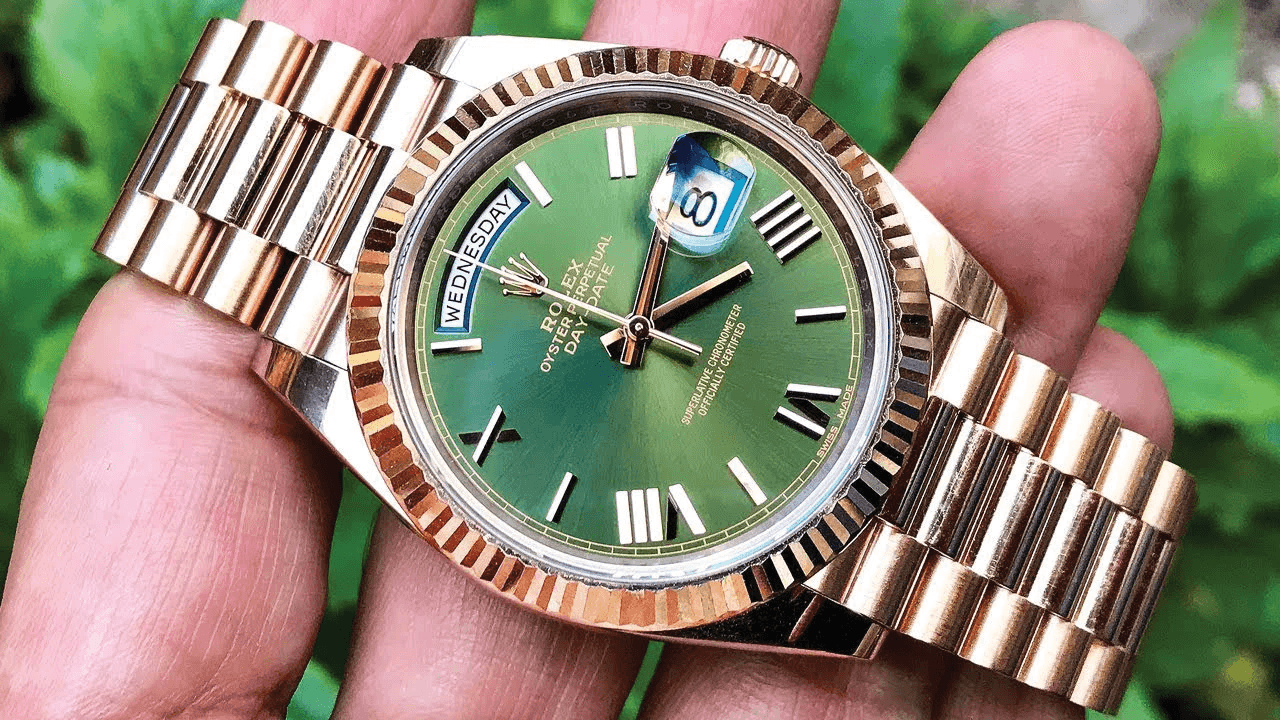
One of the biggest practical differences between the two brands right now is availability. Many popular Rolex models are extremely difficult to buy at authorized dealers, with wait times ranging from months to years. Omega watches, by contrast, are generally available for purchase at authorized dealers without a waiting list.
This matters more than some buyers realize. If you walk into an authorized dealer wanting to buy a dive watch today, you can probably walk out with an Omega Seamaster. You probably cannot walk out with a Rolex Submariner. For some buyers, immediate availability is a significant factor.
Design Philosophy
Rolex tends toward conservative, evolutionary design. The Submariner, Datejust, and GMT-Master II have all looked essentially the same for decades, with subtle refinements over time. This consistency is one of Rolex's greatest strengths. You always know what you are getting, and the design language is timeless.
Omega takes more risks with design. They experiment with new case shapes, unusual dial treatments, colorful ceramics, and limited editions tied to pop culture (like their James Bond and Snoopy collaborations). This makes Omega more exciting for buyers who want variety and individuality, but it also means that some Omega designs age less gracefully than Rolex's more restrained approach.
Which Should You Buy?
Choose Rolex if you want a watch that is universally recognized, holds its value exceptionally well, and offers a conservative design that will look appropriate in any setting for the rest of your life. Be prepared for higher prices and potential wait times at authorized dealers.
Choose Omega if you want excellent watchmaking at a more accessible price point, cutting-edge movement technology, more variety in design and limited editions, and the ability to walk into a store and buy what you want today.
Both are excellent choices. Neither is objectively "better." The right answer is the one that aligns with your priorities, your budget, and the watch that makes you excited to check the time. Knowing the real differences between the two brands puts you in a position to make that decision with confidence.
Think You Know Rolex?
Put your knowledge to the test with the free 12-question Chronodex challenge. No account required. See how you rank against thousands of other enthusiasts.
Take the Free ChallengeThis article is for educational purposes only. Chronodex is not affiliated with, endorsed by, or sponsored by Rolex SA, Rolex USA, or any of their subsidiaries. All brand names are used for educational and identification purposes only.